EMS
Temperature Data Loggers vs. EMS: Compliance, Cost, and Scalability
Author: Gagan Kaur
Nov 26, 2025
Temperature control is one of the most important variables in scientific and clinical environments. Whether you’re storing reagents, managing sample inventory, running stability studies, or protecting patient materials, you need monitoring tools that give you reliable insight into what is happening inside your equipment.
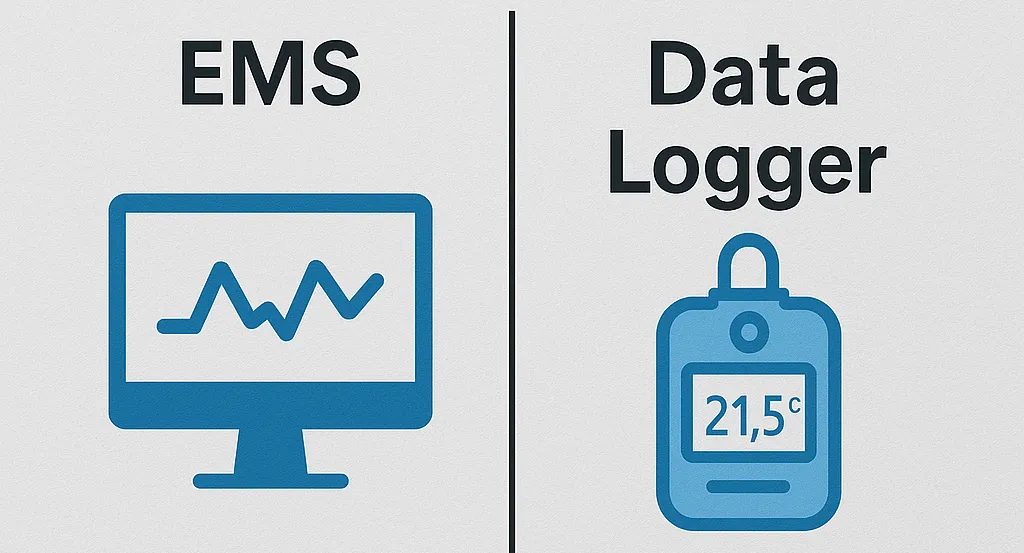
Most labs start with temperature data loggers. They’re simple, affordable, and familiar. But as operations grow and compliance expectations increase, facilities often realize that loggers alone are not enough. That’s where a full Environmental Monitoring System, or EMS, becomes the stronger long-term option.
This guide breaks down the differences between the two approaches so teams can make informed, confident decisions.
What Are Temperature Data Loggers?
Temperature data loggers are small devices that record temperature at consistent intervals. They sit inside equipment or shipments and collect data for a specific period. When the cycle ends, the device must be retrieved and the data downloaded manually.
They’re practical for short-term or historical monitoring but not designed for continuous oversight.
Where Temperature Data Loggers Work Well
- They’re affordable and easy to deploy.
- They provide basic historical data.
- They’re ideal for shipments, equipment troubleshooting, short-term validation work, and mapping studies.
- They require no network connection or large system setup.
Where They Fall Short
- No real-time alerts
- No automated reporting
- No audit trails
- Manual data retrieval
- Limited scalability
- Inconsistent visibility across multiple units
- Higher labor cost over time
- Gaps in compliance for regulated environments
As compliance needs grow, these limits become more noticeable.
What Is an Environmental Monitoring System?
An EMS is a continuous monitoring platform built for regulated environments like pharmaceutical labs, research hospitals, biobanks, and manufacturing facilities. It goes well beyond temperature, supporting humidity, differential pressure, CO₂, air changes, and other parameters.
An EMS collects data in real time, sends immediate alerts, and retains complete electronic records for audits and investigations. It gives teams continuous visibility across their entire operation.
Core Advantages of an EMS
- Continuous, uninterrupted monitoring
- Immediate alarms when a condition falls out of range
- Long-term, secure data retention
- Audit trails and electronic signatures
- User access controls
- System validation
- Scalability across multiple buildings or campuses
- Consistent reporting for quality and operations teams
An EMS becomes part of the compliance infrastructure, not just a temperature tool.
Compliance: The Sharpest Difference Between the Two
Temperature data loggers may help document historical temperature trends, but they do not meet auditor expectations around real-time oversight, secure records, or documented control of environmental conditions.
An EMS is built to support these expectations. It provides:
- Continuous data with no gaps
- Audit trails that show every action taken
- Electronic signatures
- Validation documentation
- Secure, tamper-resistant records
- Alarm histories that support deviation investigations
- User access control tied to SOPs
Facilities that rely on loggers alone often find themselves doing extra work during audits because the system cannot demonstrate active control.
Cost: Why Loggers Seem Cheaper but Rarely Are
Loggers usually look attractive because of their low purchase price. But over time, the hidden costs become significant:
- Manual data downloads
- Investigations when data is missing
- Calibration for individual devices
- Replacements for lost or damaged units
- Lost labor hours for routine checking
- Risk of undetected temperature excursions that lead to product loss
Even a single excursion can outweigh years of logger purchases.
Why an EMS Usually Saves Money Long Term
- Automated reporting
- Real-time alerts that prevent loss
- Centralized oversight
- Calibrated and serviceable sensors
- Long service life
- Data that is always accessible and never misplaced
When facilities compare total cost of ownership rather than the purchase price of a single unit, an EMS consistently offers better long-term value.
Scalability: When Growth Outpaces Loggers
A facility with one or two refrigerators can manage with loggers. But once monitoring expands across multiple rooms, buildings, or locations, managing dozens of individual devices creates operational blind spots.
- Loggers provide monitoring one device at a time.
- An EMS provides monitoring for the entire facility.
How an EMS Supports Growth
- Unlimited monitoring points
- Multi-site dashboards
- Role-based access for different teams
- Consistent reports and audit-ready exports
- Coordinated alarm response
- Enterprise-wide visibility
As a facility grows or becomes more regulated, the need for a centralized monitoring system becomes unavoidable.
Q&A: Common Questions From Lab Teams
What is a temperature data logger for?
It records temperature for a set time period to verify that conditions stayed within range.
Why would you use a temperature data logger?
It’s a simple, low-cost way to capture historical temperature trends when real-time alerts aren’t needed.
Is a logger enough for a regulated environment?
Usually not. Loggers lack the electronic records, audit trails, and continuous oversight expected in most regulated settings.
How does an EMS reduce risk?
It sends immediate alerts when temperatures drift, helping teams respond before there is a loss or deviation.
Can a lab use both?
Yes. Many teams use loggers for mapping and shipments while relying on an EMS for daily operations.
Where Rees Scientific Fits In
For organizations moving beyond basic data loggers, Rees Scientific supports the transition with a full monitoring platform designed for regulated environments. The system provides continuous temperature monitoring, real-time alerts, long-term data retention, and audit-ready records across every monitored point. It also scales easily as facilities expand, making it a strong fit for labs that need a dependable, compliance-focused solution.
Teams often start with simple loggers but eventually outgrow them. When that happens, Rees Scientific’s monitoring system provides the visibility, reliability, and documentation structure needed to protect products and maintain regulatory confidence at every step.
Have questions about monitoring options? We’re here to help you choose the solution that fits your facility today and supports where you’re headed next. Request an Assessment today!