
EMS
Cloud vs. On-Premises Environmental Monitoring Systems: Which Is Right for Your Facility?
Author: Gagan Kaur
Dec 10, 2025
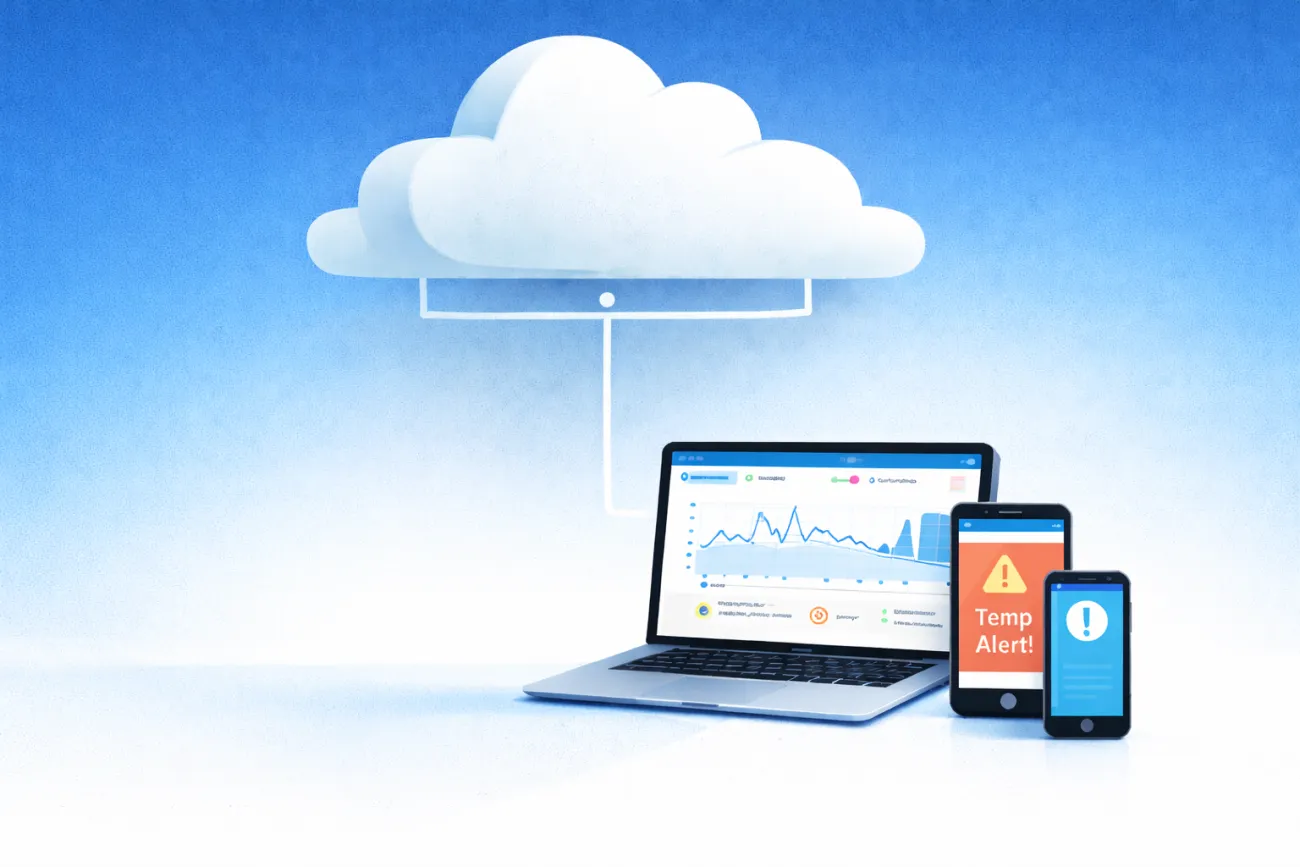
Choosing the right environmental monitoring system is one of the most important decisions a facility makes. Whether you are monitoring refrigerators, freezers, incubators, cleanrooms, or high-value research spaces, the way your data is collected and stored has a direct impact on compliance, reliability, and operational continuity.
Today, most organizations are evaluating two main approaches: a cloud-based system or an on-premises system hosted on their internal network. Both are widely used across hospitals, laboratories, pharmaceutical manufacturers, and blood centers, but each supports different operational needs.
This guide breaks down how the two models compare so you can determine which one fits best with your facility’s structure, staffing, and long-term plans.
What Is a Cloud-Based EMS?
A cloud-based EMS stores monitoring data in a secure online environment. All information is accessible through a web browser, allowing staff to log in from virtually anywhere.
Key Advantages of Cloud Systems
Remote Accessibility
Teams can review equipment status and investigate alarms from home, from another campus, or while on call. This is especially helpful for organizations with rotating schedules or distributed locations.
Automatic Updates
Security enhancements, bug fixes, and new features are handled by the provider. Your IT team does not need to manually manage updates.
Scalability
Adding sensors or expanding to new areas does not require additional server hardware.
Unified Visibility Across Multiple Sites
Hospitals, research networks, and blood centers can monitor all locations from one dashboard.
Considerations for Cloud Systems
Real-time visibility depends on stable internet access. Most systems buffer data locally during outages, but facilities must be comfortable with cloud connectivity and the required cybersecurity reviews.
What Is an On-Premises EMS?
An on-premises EMS runs on servers within the facility. All data stays inside the organization’s network, and the IT team manages the system directly.
Key Advantages of On-Premises Systems
Full Control of Data
Highly regulated or security-sensitive environments often prefer to keep all data in-house.
Reliable Performance on Internal Networks
System communication is not affected by internet disruptions.
Ideal for Limited-Connectivity Environments
Manufacturing suites, government labs, and restricted access facilities often choose on-premises for this reason.
Considerations for On-Premises Systems
An on-premises EMS requires IT support for server maintenance, storage, security patches, backups, and system performance. If remote access is needed, IT typically configures VPN or secure access pathways.
How to Decide Which System Fits Your Facility
Cloud works best for facilities that:
• Have multiple locations
• Need monitoring access during off-hours
• Want minimal IT involvement
• Plan to expand their monitoring footprint
• Value easy, browser-based access
Common examples include hospitals, blood centers, CROs, and academic research programs.
On-premises environmental monitoring works best for facilities that:
• Must keep systems behind the firewall
• Operate in restricted network environments
• Have dedicated IT support
• Prefer local control over system architecture
• Handle sensitive research or manufacturing processes
This is common in pharmaceutical production, cleanrooms, and government research.
Hybrid Approaches Are Growing
Hybrid systems combine local data storage with browser-based access, giving organizations the flexibility they want while keeping data inside the facility. Many institutions now view hybrid setups as a balanced, future-ready solution.
Frequently Asked Questions About EMS Systems
Does a cloud-based EMS store my data permanently?
Cloud systems typically store data long-term, but retention policies vary. Many organizations choose cloud because it removes the burden of maintaining internal storage.
Is an on-premises EMS more secure than a cloud system?
Not necessarily. Both can be highly secure when implemented correctly. The difference lies in who manages the security. On-premises systems rely on your internal IT team, while cloud systems rely on the provider’s security framework.
What happens to monitoring data if the internet goes down?
Most cloud-enabled EMS platforms buffer data locally until the connection is restored. Your real-time dashboard may pause temporarily, but the underlying data is still captured.
Which option is better for facilities with multiple campuses?
Cloud systems are often preferred because they allow teams to view all locations from one interface. On-premises systems can support multiple buildings, but usually require more configuration.
Can I switch from on-premises to cloud in the future?
Many organizations migrate as their IT strategy evolves. The key is choosing a provider that supports both models and can guide you through the transition.
Final Thoughts
Your EMS architecture should support the way your facility actually operates. Both cloud and on-premises systems offer reliable monitoring for refrigerators, freezers, cleanrooms, and other controlled environments. The best choice depends on your policies, staffing, and the level of visibility your teams need.
If you are evaluating the next step for your monitoring strategy, Rees Scientific can help you compare options and choose the configuration that fits your facility. Our team supports both cloud and on-premises deployments and can walk you through how each model would work in your environment.
Ready to explore the right EMS approach for your organization? Learn more about Rees Scientific's EMS services and contact us to get started.