EMS
Environmental Monitoring in Hospitals
Author: Gagan Kaur
Oct 14, 2026
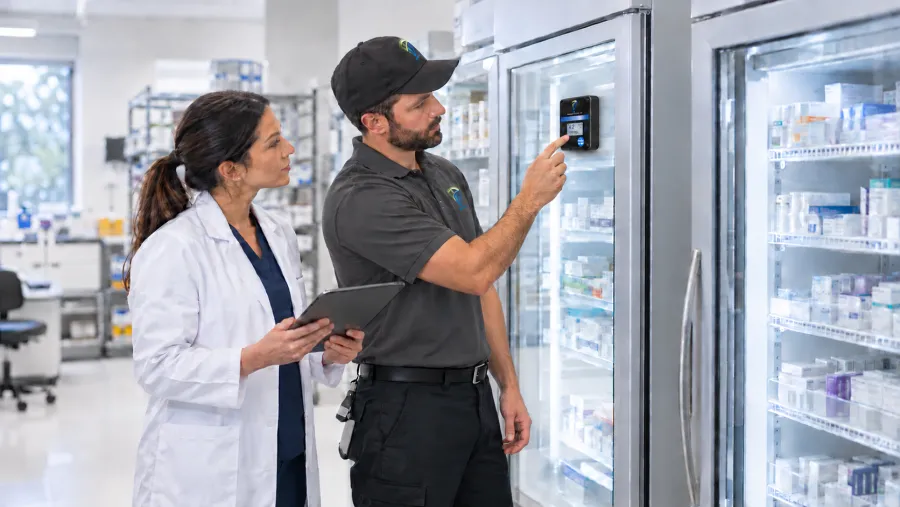
A medication refrigerator alarms in the middle of the night. The person receiving the notification needs to find the unit, understand what happened, and decide whom to contact. The next shift needs to know what action was taken. Later, someone may need to retrieve the complete record for review.
For hospital teams, that is where environmental monitoring becomes useful. Reliable readings matter, but so do clear responsibilities, accessible records, and support when something needs attention.
A well-planned environmental monitoring system can help pharmacy, laboratory, blood bank, facilities, and quality teams carry out that work. The starting point is understanding where their current process creates extra effort or uncertainty.
Start with the challenges staff face every day
Monitoring programs often grow one department at a time. A new freezer introduces another logger. A satellite pharmacy has its own contact list. A laboratory maintains records differently from the blood bank. Each arrangement may work locally, while making hospital-wide oversight more difficult.
Before evaluating a system, ask the people doing the work:
- Where do manual checks or report preparation take the most time?
- Which alarms are difficult to interpret or reach the wrong people?
- How easily can staff retrieve the history of an event?
- Who coordinates calibration, maintenance, and changes to monitored equipment?
Use those answers to define requirements. A system should help staff perform their responsibilities with less searching, clearer handoffs, and information they can use.
Match monitoring to the department and application
A vaccine refrigerator, blood product storage unit, laboratory incubator, and compounding room have different purposes. Their sensors, limits, review routines, and response procedures should reflect those differences.
Build an inventory that identifies each asset, its location, the material or room function it supports, the conditions to monitor, and the department responsible. Use names people can recognize in an alarm, such as “Pharmacy refrigerator RX-014, Building B, Room 204.”
For vaccine storage, CDC recommends digital data loggers with suitable probes, alarms, and programmable recording intervals of every 30 minutes or more often. Check the immunization program requirements applicable to the site. Those recommendations should not automatically become the settings for every hospital asset. [1]
Select other monitoring conditions according to the application. Humidity, differential pressure, door status, or equipment signals may provide useful information when there is a defined reason to collect them and someone responsible for acting on them.
Make every alarm part of a response process
An alarm needs a primary responder, a backup, and an escalation route. It also needs a clear connection to the department’s procedure for investigating the event and assessing affected materials.
Acknowledgment confirms receipt. Resolution requires action and review. Staff should be able to establish when conditions changed, who was notified, what happened next, and whether follow-up remains open.
Test that workflow using a simulated event where the primary contact is unavailable. Have the backup find the asset, review its history, and document the response. Do this without disturbing a live storage unit.
If alarms recur, investigate equipment behavior, probe placement, communication health, and routing before changing limits or delays. Fewer notifications are useful when important events still reach the right people.
Share a platform while preserving department responsibility
A shared monitoring system does not require every department to use identical settings or access. Hospitals can standardize asset naming, technical support, and record practices while allowing departments to use appropriate limits, contacts, and review routines.
Pharmacy staff may need to focus on medication storage. Laboratory managers need laboratory records. Facilities and authorized quality reviewers may need broader visibility. Define separately who can view readings, acknowledge alarms, change settings, and administer users.
Test these permissions with representative users. Confirm that an alarm reaches the intended department and that changes in one area do not unexpectedly affect another. Name a hospital system owner and department contacts to maintain that structure as staff and equipment change.
Plan service as part of the monitoring program
A probe needs calibration. A unit moves to another room. A communication problem keeps returning. These situations require coordination alongside the hospital’s daily workload.
Ask how regional service supports on-site work, planned maintenance, troubleshooting, and equipment changes. Clarify who schedules visits, what documentation is provided, and how monitoring continues while work is underway.
Also test outage behavior. Recording data locally, recovering stored readings, and delivering an alarm during an interruption are different capabilities. Staff needs to know which functions remain available and what contingency procedure to follow.
Include calibration, maintenance, training, and support in the evaluation and budget. A monitoring program needs to remain usable after installation, through staff changes, service visits, and expansion.
Connect the system to the hospital’s procedures
Useful records connect readings with asset identity, alarm history, acknowledgments, and documented action. Have users retrieve a sample event report and check whether someone who was not present can understand it.
Environmental monitoring supports a compliance program alongside approved procedures, trained staff, record review, and corrective action. Automated records can reduce administrative work, while the hospital retains responsibility for reviewing events and making decisions about affected materials.
How Rees Scientific can help
Rees Scientific helps hospitals put monitoring requirements into practice through system design, software, installation, calibration, validation services where applicable, training, and ongoing support. Rees Helix offers monitoring views, reporting, alarm escalation, audit trails, and access controls.
Rees software also offers departmental organization, allowing pharmacy, blood bank, laboratory, and other teams to use the same system with different permissions and settings configured for each department. The setup should reflect the hospital’s responsibilities and be demonstrated in the proposed configuration.
Rees has regional service teams that can support on-site calibration, preventive maintenance, troubleshooting, and planned system changes. This gives hospital teams a service resource as their monitoring needs evolve. Confirm coverage, service scope, and support arrangements during planning.
Frequently asked questions
What is the best environmental monitoring system for healthcare compliance
The best fit meets the hospital’s measurement, alarm response, documentation, IT, and service needs. Compare systems using realistic workflows and evidence from the proposed configuration.
Can one system support several hospital departments
Yes, when it supports suitable grouping, permissions, and settings. Departments can share a platform while retaining responsibility for their assets, alarms, and records.
Why does regional service matter
Regional service can help coordinate on-site calibration, maintenance, troubleshooting, and changes around hospital operations. Evaluate coverage and agreed responsibilities as part of the monitoring plan.
How should a hospital plan monitoring sensor calibration
Set a documented schedule based on the application, manufacturer guidance, and hospital procedures. Assign responsibility for tracking due dates, retaining certificates, and arranging coverage during service. Confirm who assesses earlier readings if a sensor is found out of tolerance.
What records help hospital teams review an alarm or excursion
Keep the asset identity, readings, event timing, notification history, acknowledgment, and documented actions connected. Record the authorized review and any decisions about affected materials. Staff should be able to retrieve this history without searching several systems or relying on someone’s memory.
Build a monitoring plan around your hospital
Whether you’re reviewing current coverage or planning an expansion, start with the challenges your teams need to solve. Talk with Rees Scientific about a monitoring approach that fits your departments, workflows, and service needs.
Discuss your hospital monitoring needs
Sources
[1] CDC Temperature Monitoring Equipment | July 14 2026