EMS
When Hackers Turn Up the Heat: Why Independent Temperature Monitoring Matters
Author: Gagan Kaur
Nov 4, 2026
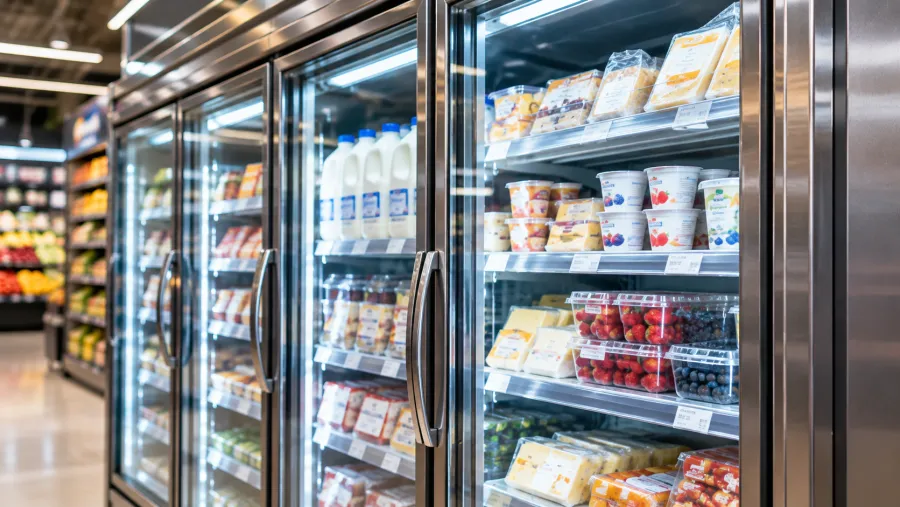
In October and November 2026, cyberattacks targeting refrigeration systems across Europe caused temperatures to rise unexpectedly, leaving supermarkets with spoiled inventory and significant financial losses.
But the attacks didn't stop at supermarkets.
On November 2, a cyberattack affected refrigeration equipment at three facilities operated by France's national blood service, the Établissement français du sang (EFS). Attackers reportedly manipulated temperature and defrost settings in cold storage areas containing plasma.
Fortunately, monitoring and alarm systems detected the abnormalities, allowing personnel to respond before blood products were compromised.
These incidents raise an important question for hospitals, pharmaceutical manufacturers, laboratories, blood banks, and other facilities responsible for temperature-sensitive materials:
If someone manipulated your refrigeration system overnight, how quickly would your team know?
The answer highlights an important distinction between controlling temperature and independently monitoring it. For facilities storing critical materials, continuous environmental monitoring provides an important layer of visibility when equipment behaves unexpectedly.
What Happened: Cyberattacks Target Refrigeration Systems Across Europe
October 2026: Hundreds of French Supermarkets Affected
During the night of October 11–12, attackers remotely manipulated refrigeration systems at hundreds of supermarkets across France.
Affected retailers included Intermarché, Carrefour, Coopérative U, Monoprix, and E.Leclerc.
In some locations, refrigeration temperatures reportedly reached 50°C (122°F), causing food spoilage and equipment damage. Some stores lost substantial quantities of refrigerated and frozen inventory.
The attacks targeted connected refrigeration controllers, including equipment manufactured by Danfoss. These controllers allow technicians and maintenance providers to remotely manage refrigeration settings, including temperature setpoints and defrost cycles.
France's national cybersecurity response team, CERT-FR, issued a security alert identifying compromised refrigeration control systems and warning against exposing management interfaces directly to the internet.
The incidents demonstrated how vulnerabilities in connected equipment can create operational risks beyond traditional IT systems.
November 2026: Attacks Spread Across Europe
On November 2, additional refrigeration disruptions were reported at supermarkets in Sweden, Belgium, Luxembourg, Estonia, and other European countries.
According to Reuters' reporting on the European refrigeration cyberattacks, several retailers experienced unexpected temperature increases, with some facilities forced to discard refrigerated and frozen products.
In Sweden, one supermarket reported that freezer settings had been raised to 50°C.
The incidents reinforced a troubling reality: equipment designed to protect temperature-sensitive inventory can become a source of risk when its control systems are compromised.
For organizations handling critical biological materials, pharmaceuticals, or medical products, the potential consequences extend far beyond financial losses.
When the Attacks Reached Healthcare: A Blood Bank's Response
One of the most important incidents occurred at facilities operated by France's national blood service, EFS.
On November 2, attackers compromised equipment associated with a refrigeration supplier serving three EFS plasma-storage sites.
Temperature and defrost settings were reportedly manipulated to extreme levels. The affected facilities stored plasma intended for transfusion and pharmaceutical manufacturing.
According to Associated Press reporting on the blood bank incident, monitoring and alarm systems detected the abnormalities, allowing staff to secure or transfer stored plasma before it was compromised.
No blood products were reportedly lost.
The incident provides an important example of why monitoring and response capabilities matter.
Although the refrigeration control equipment was affected, the facility's monitoring and alarm capabilities helped personnel identify the problem and respond.
For healthcare and life sciences organizations, this distinction is critical.
Blood products, vaccines, pharmaceuticals, cell and gene therapies, and research samples often require carefully controlled storage conditions. Temperature excursions can threaten product quality, patient safety, research integrity, and regulatory compliance.
The ability to identify an abnormal condition quickly can make a meaningful difference in the outcome.
Controlling Temperature Is Not the Same as Monitoring It
Modern refrigeration systems typically use controllers to maintain required storage conditions.
These controllers regulate cooling cycles, manage temperature setpoints, and initiate defrost operations. Many also include built-in alarms and remote management capabilities.
However, a refrigeration controller and an independent environmental monitoring system serve different purposes.
A refrigeration controller is responsible for operating the equipment.
An independent environmental monitoring system measures and records actual environmental conditions, providing a separate layer of visibility.
Consider a freezer storing temperature-sensitive pharmaceutical materials.
If someone changes the freezer's temperature setpoint, the refrigeration controller may begin operating according to that new setting.
A properly configured independent monitoring system, using separate sensors and alarm thresholds, can detect when the actual storage temperature moves outside acceptable limits, regardless of the controller's programmed setpoint.
That distinction matters because an organization should not have to rely exclusively on the same equipment responsible for maintaining storage conditions to identify every potential failure.
Independent monitoring does not prevent a cyberattack or replace cybersecurity protections. It provides an additional way to detect abnormal environmental conditions and initiate a response.
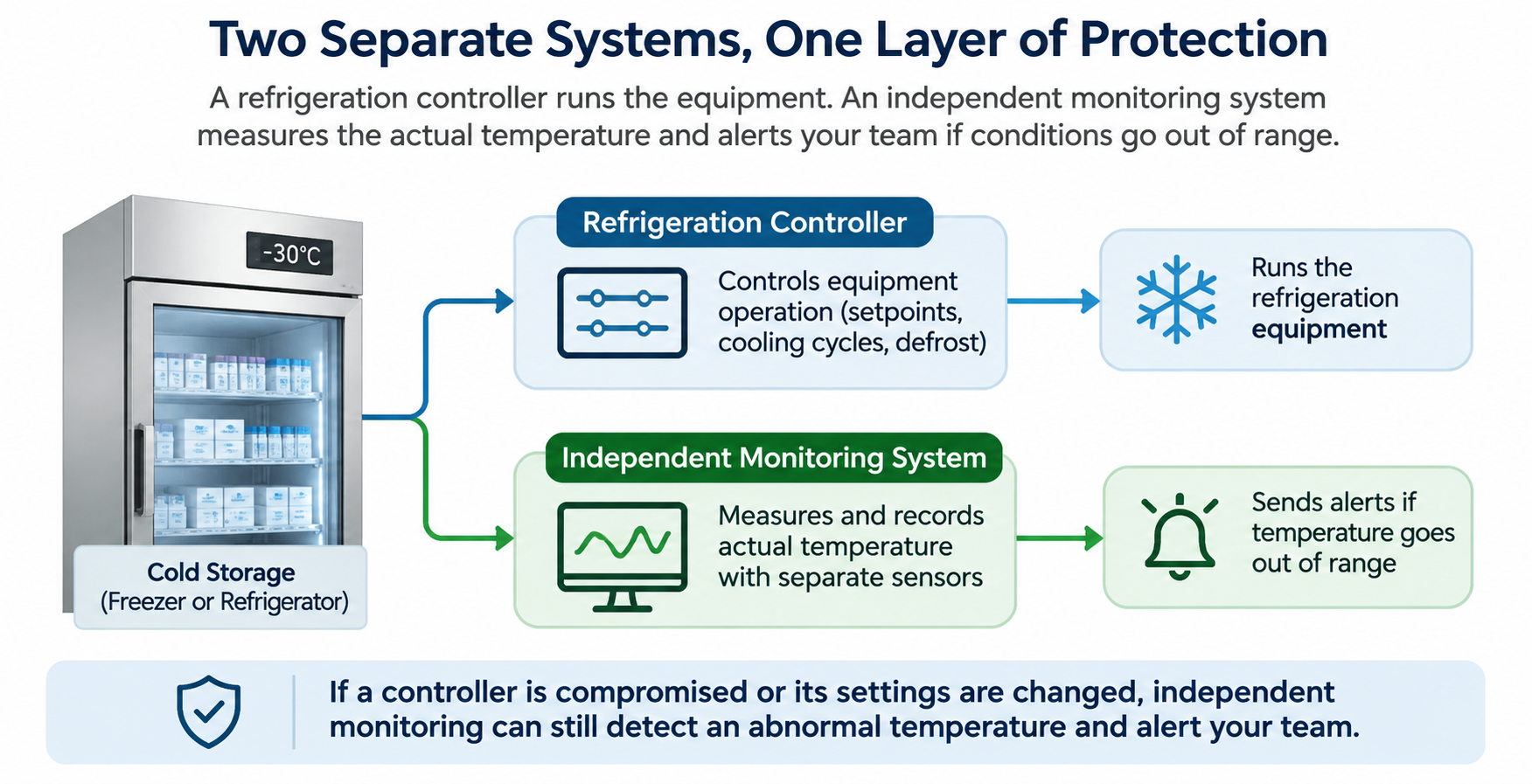
A refrigeration controller manages equipment operation, while an independent monitoring system measures actual temperatures and sends alerts when conditions move outside established limits.
Why Continuous Temperature Monitoring Matters
A refrigeration failure or unexpected temperature change can occur at any time, including overnight, during weekends, or when a facility is operating with limited staff.
Manual temperature checks provide information at specific moments, but they may not reveal what happened between readings.
For example, a freezer could experience a temperature excursion overnight and return to its normal operating range before the next scheduled manual inspection.
Without continuous monitoring and historical temperature records, personnel may not have a complete picture of the event.
A continuous environmental monitoring system can provide several important capabilities.
1. Around-the-Clock Temperature Visibility
Continuous monitoring captures environmental readings throughout the day and night, helping facilities identify temperature changes that might otherwise go unnoticed.
This is especially important for refrigerators, freezers, ultra-low temperature storage units, cryogenic storage, and other critical environments.
Facilities can choose from wired and wireless environmental monitoring equipment depending on their infrastructure, monitoring requirements, and facility layout.
2. Automated Alerts and Notifications
When monitored conditions exceed established limits, automated alarms can notify designated personnel through configured communication methods.
Depending on the system and its configuration, notifications may include email, text messages, phone calls, or other alarm delivery methods.
These alerts help teams recognize problems and begin responding without waiting for the next manual inspection.
3. Historical Temperature Records
Continuous monitoring systems maintain records of environmental conditions over time.
These records can help quality and operations teams understand when a temperature excursion began, how long it lasted, and what conditions were recorded.
Modern environmental monitoring software can provide access to historical readings, reports, alarm information, and other monitoring data.
This information can be valuable during investigations, product impact assessments, and quality reviews.
4. Support for Documented Response Procedures
Monitoring is most effective when combined with clear response procedures.
Facilities should establish alarm thresholds, assign response responsibilities, identify backup storage options, and document corrective actions when excursions occur.
An alarm provides information. A trained team with an established response plan determines what happens next.
The Regulatory Implications for Healthcare and Life Sciences
For regulated facilities, temperature monitoring is not simply about preventing product loss.
It is also part of maintaining controlled storage conditions and supporting quality management processes.
Depending on the products and operations involved, organizations may need to demonstrate that temperature-sensitive materials were stored under appropriate conditions and that deviations were investigated and documented.
For example:
- Pharmaceutical and biotechnology facilities: Temperature excursions may require documented investigations, product impact assessments, and corrective or preventive actions under applicable GxP requirements.
- Blood and tissue facilities: Appropriate storage conditions and documented monitoring are important for protecting product integrity and supporting applicable blood banking and tissue standards.
- Hospitals and healthcare facilities: Temperature monitoring supports the safe storage of medications, vaccines, blood products, and other temperature-sensitive supplies.
- Research laboratories and biobanks: Reliable monitoring records help protect valuable samples and support research continuity.
For organizations operating under requirements such as FDA 21 CFR Part 11, electronic records, access controls, and audit trail capabilities may also be important when applicable.
However, no monitoring system alone guarantees regulatory compliance. Compliance depends on the complete system, its intended use, appropriate validation, procedures, training, and ongoing oversight.
The European incidents reinforce the importance of maintaining reliable environmental records and having established procedures for responding to unexpected conditions.
How Facilities Can Reduce Cold Storage Risk
The recent cyberattacks highlight the need for both cybersecurity protections and dependable environmental monitoring.
Facilities should evaluate their refrigeration infrastructure, monitoring capabilities, and emergency response procedures together.
Secure Refrigeration Control Systems
1. Identify connected equipment. Work with IT teams, facility managers, and refrigeration contractors to determine which controllers allow remote access and how those connections are secured.
2. Limit internet exposure. Avoid exposing refrigeration management interfaces directly to the public internet. Follow CERT-FR's cybersecurity guidance and use appropriately secured remote access methods when remote maintenance is necessary.
3. Update firmware and replace unsupported equipment. Maintain supported software and firmware versions and develop replacement plans for equipment that no longer receives security updates.
4. Strengthen access controls. Change default credentials, restrict access to authorized personnel, and review contractor permissions.
5. Coordinate cybersecurity responsibilities. Establish clear ownership between IT, facilities, equipment vendors, and third-party service providers.
Strengthen Environmental Monitoring
1. Use independent temperature monitoring. Consider monitoring solutions with separate sensors and alarm thresholds that do not depend solely on the refrigeration controller.
2. Monitor critical equipment continuously. Maintain visibility into refrigerators, freezers, cold rooms, and other temperature-sensitive storage environments.
3. Configure appropriate alarm notifications. Make sure alerts reach designated personnel, including outside normal operating hours.
4. Maintain accessible historical records. Ensure temperature data is available for investigations, reporting, and applicable quality documentation.
5. Establish and test emergency response procedures. Identify backup storage locations, assign responsibilities, and periodically test alarm and escalation processes.
Together, these practices can help facilities identify potential problems earlier and respond more effectively when storage conditions change unexpectedly.
Frequently Asked Questions
Can hackers change the temperature of a refrigerator or freezer?
Yes. Refrigeration systems equipped with network-connected controllers may be vulnerable to unauthorized access if they are improperly secured or contain exploitable vulnerabilities.
The European incidents in October and November 2026 demonstrated how attackers could manipulate refrigeration settings remotely, potentially causing equipment damage and product loss.
What is the difference between refrigeration controls and independent temperature monitoring?
Refrigeration controls regulate equipment operation, including cooling cycles, temperature setpoints, and defrost functions.
Independent temperature monitoring uses separate measurement and alarm capabilities to track actual environmental conditions.
When properly designed and configured, an independent monitoring system can provide an additional layer of protection by detecting abnormal temperatures even if the refrigeration controller is malfunctioning or has been manipulated.
How can continuous temperature monitoring help protect vaccines, blood products, and pharmaceuticals?
Continuous temperature monitoring helps facilities identify storage conditions outside established limits.
Automated alerts allow designated personnel to investigate and take appropriate action, while historical temperature records support the evaluation and documentation of excursions.
Early detection may provide valuable time to respond before temperature-sensitive materials are affected, depending on the product and storage conditions.
What should a facility do when a cold storage temperature alarm is triggered?
Facilities should follow their established standard operating procedures.
Depending on the situation, this may include verifying the temperature reading, inspecting equipment, notifying responsible personnel, securing or transferring affected materials, and documenting the event.
Quality personnel should determine whether an excursion requires additional investigation or a product impact assessment before affected materials are released for use.
Can independent environmental monitoring support regulatory compliance?
Yes. Environmental monitoring systems can support compliance efforts by providing continuous readings, historical records, alarm documentation, and, where available, audit trails and electronic record capabilities.
The specific requirements depend on the facility, application, and applicable regulations or standards.
A properly implemented monitoring system should be supported by appropriate validation, operating procedures, personnel training, and ongoing quality oversight.
How Rees Scientific Helps Protect Critical Storage Environments
At Rees Scientific, we understand that maintaining appropriate environmental conditions is essential for protecting valuable products, supporting quality requirements, and keeping critical operations running.
Our environmental monitoring solutions provide continuous monitoring for refrigerators, freezers, ultra-low temperature storage, cryogenic environments, and other temperature-sensitive applications.
With wired and wireless monitoring options, automated alarm notifications, historical data, and reporting capabilities, Rees helps facilities maintain visibility into critical storage conditions.
Our monitoring solutions can operate independently of the equipment they monitor, providing an additional layer of environmental visibility when refrigeration equipment experiences an unexpected problem.
Rees also provides system validation, calibration, and ongoing service support to help organizations maintain reliable monitoring throughout the system lifecycle.
The recent European refrigeration cyberattacks demonstrate why organizations should look beyond refrigeration controls alone.
The question isn't simply whether your refrigeration equipment is maintaining the correct temperature. It's whether your team will know quickly enough when something goes wrong.
Protect Your Cold Storage with Continuous Monitoring
Is your facility prepared to detect an unexpected temperature excursion, even outside normal operating hours?
Learn how Rees Scientific can help you monitor critical storage conditions, receive timely alerts, and maintain reliable environmental records. Contact a Rees Specialist
Sources
- CERT-FR: Security Alert on Refrigeration Controllers
- Le Monde: French Supermarkets Affected by Refrigeration Cyberattacks
- Reuters: Cyberattack on Fridges Hits Supermarkets Across Europe
- Associated Press: Refrigeration Cyberattacks Across Europe
- Associated Press: Cyberattack Hits French Blood Bank Site