Validation Services
From Qualification to Continuous Confidence: How Temperature Mapping and Environmental Monitoring Work Together
Author: Gagan Kaur
Jul 22, 2026
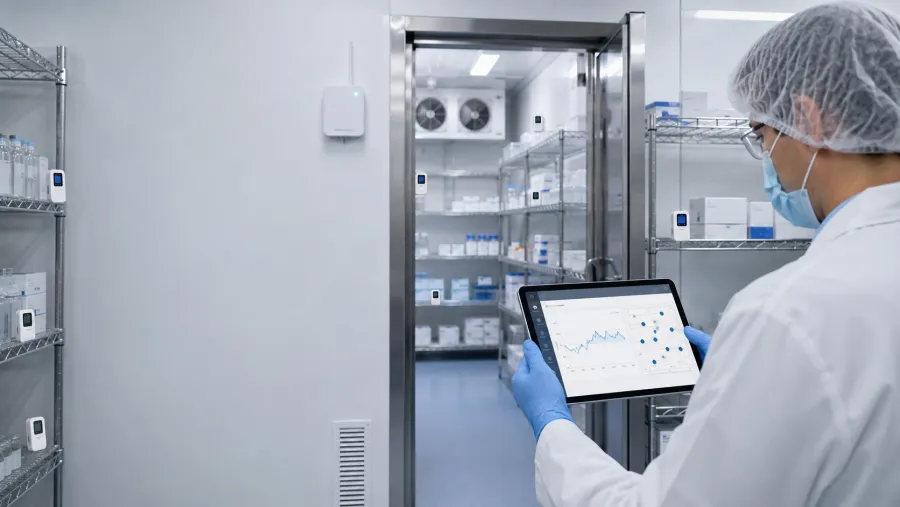
Temperature mapping has long been a cornerstone of environmental qualification in regulated industries. Whether validating a cold room, incubator, warehouse, stability chamber, refrigerator, freezer, or cleanroom, mapping provides documented evidence that an environment performs as intended and meets regulatory requirements.
Today, organizations are finding new ways to maximize the value of those studies.
Rather than viewing temperature mapping as a standalone validation activity, many facilities are using the results to build smarter Environmental Monitoring Systems (EMS). Mapping data now helps determine permanent sensor locations, optimize alarm strategies, and create a seamless transition from qualification to continuous monitoring.
The result is an integrated approach that strengthens environmental control throughout the entire lifecycle of the monitored space.
Temperature Mapping Provides the Foundation
A temperature mapping study delivers a detailed understanding of how an environment performs under normal operating conditions.
It identifies:
- Temperature distribution throughout the space
- Hot and cold locations
- Airflow patterns
- Recovery times following door openings
- Areas with greater temperature variability
- Seasonal performance considerations
This information is essential for equipment qualification, regulatory compliance, and demonstrating that controlled environments operate within required specifications.
Just as importantly, the data provides valuable insight that can support long-term environmental monitoring strategies.
Using Mapping Data to Optimize Continuous Monitoring
Once a space has been qualified, continuous monitoring ensures those validated conditions are maintained every day.
Increasingly, organizations are using their mapping reports to determine where permanent monitoring sensors should be installed.
Instead of selecting sensor locations based solely on convenience, facilities can use documented qualification data to identify locations that best represent environmental performance.
This approach helps answer important questions such as:
- Which locations experience the greatest temperature variation?
- Where should permanent sensors be placed?
- Which areas should trigger alarms first?
- How can monitoring best represent real operating conditions?
The result is an Environmental Monitoring System that builds directly upon the work already completed during qualification.
Better Alarm Strategies Through Better Understanding
One of the greatest benefits of combining mapping with continuous monitoring is the ability to develop more effective alarm strategies.
Because mapping studies document how an environment naturally behaves, organizations can establish alarm limits based on actual performance rather than generalized assumptions.
This can help:
- Reduce nuisance alarms
- Improve response to true environmental excursions
- Support risk-based monitoring strategies
- Increase confidence in alarm settings
Rather than replacing mapping, continuous monitoring extends the value of the qualification data throughout daily operations.
Continuous Monitoring Complements Periodic Qualification
Temperature mapping and continuous environmental monitoring serve different but complementary purposes.
Mapping verifies that an environment performs correctly during qualification.
An Environmental Monitoring System continuously verifies that those conditions remain within specification during routine operation.
Together they provide a more complete picture of equipment performance over time.
Continuous monitoring can also help identify gradual performance changes that may indicate equipment maintenance is needed, allowing organizations to investigate issues before they become larger operational concerns.
Wireless Technologies Make Integration Easier
As wireless Environmental Monitoring Systems become more common, integrating mapping studies with ongoing monitoring has become simpler than ever.
Wireless sensors can often be installed in the validated locations identified during mapping while providing flexibility for future expansion as facilities grow.
Benefits include:
- Easier deployment
- Flexible sensor placement
- Scalability across multiple facilities
- Reduced installation complexity
- Continuous visibility into critical environments
This flexibility allows organizations to maintain the integrity of their qualification strategy while adapting to changing operational needs.
Supporting a Lifecycle Approach to Environmental Control
Regulatory expectations continue to emphasize risk management, data integrity, and maintaining control throughout the entire lifecycle of equipment and facilities.
Combining temperature mapping with continuous monitoring supports this lifecycle approach.
Rather than treating qualification and routine monitoring as separate activities, organizations are creating connected environmental monitoring programs where each process strengthens the other.
The result is greater confidence that critical environments continue to perform as expected long after initial qualification has been completed.
The Best Results Come from Both
Temperature mapping and continuous Environmental Monitoring Systems are not competing approaches. They are complementary components of a comprehensive environmental monitoring program.
Temperature mapping establishes the baseline by demonstrating how an environment performs during qualification.
An Environmental Monitoring System builds on that foundation by continuously verifying those conditions during day-to-day operations.
Together, they help organizations improve visibility, strengthen documentation, support regulatory requirements, and maintain confidence in critical environments throughout their operational lifecycle.
How Rees Scientific Supports Both
Whether you're qualifying a new controlled environment or enhancing an existing monitoring program, Rees Scientific provides solutions for every stage of the process. Our Temperature Mapping Services help organizations validate the performance of critical environments with comprehensive qualification studies, while our Environmental Monitoring Systems deliver continuous, real-time monitoring to maintain visibility long after qualification is complete.
By combining expert mapping services with industry-leading monitoring technology, Rees Scientific helps organizations build an integrated environmental monitoring strategy that supports compliance, improves operational confidence, and protects critical products every day.
Build a stronger environmental monitoring strategy from the start.
Whether you're planning a temperature mapping study, implementing a new Environmental Monitoring System, or looking to optimize your existing monitoring program, Rees Scientific can help. Our experts provide comprehensive mapping services and continuous monitoring solutions designed to support your operational and regulatory goals.
Contact Rees Scientific today to learn how an integrated approach to mapping and environmental monitoring can help protect your critical environments.