EMS
How Environmental Monitoring Software Makes EMS Data Easier to Manage
Author: Gagan Kaur
May 22, 2026
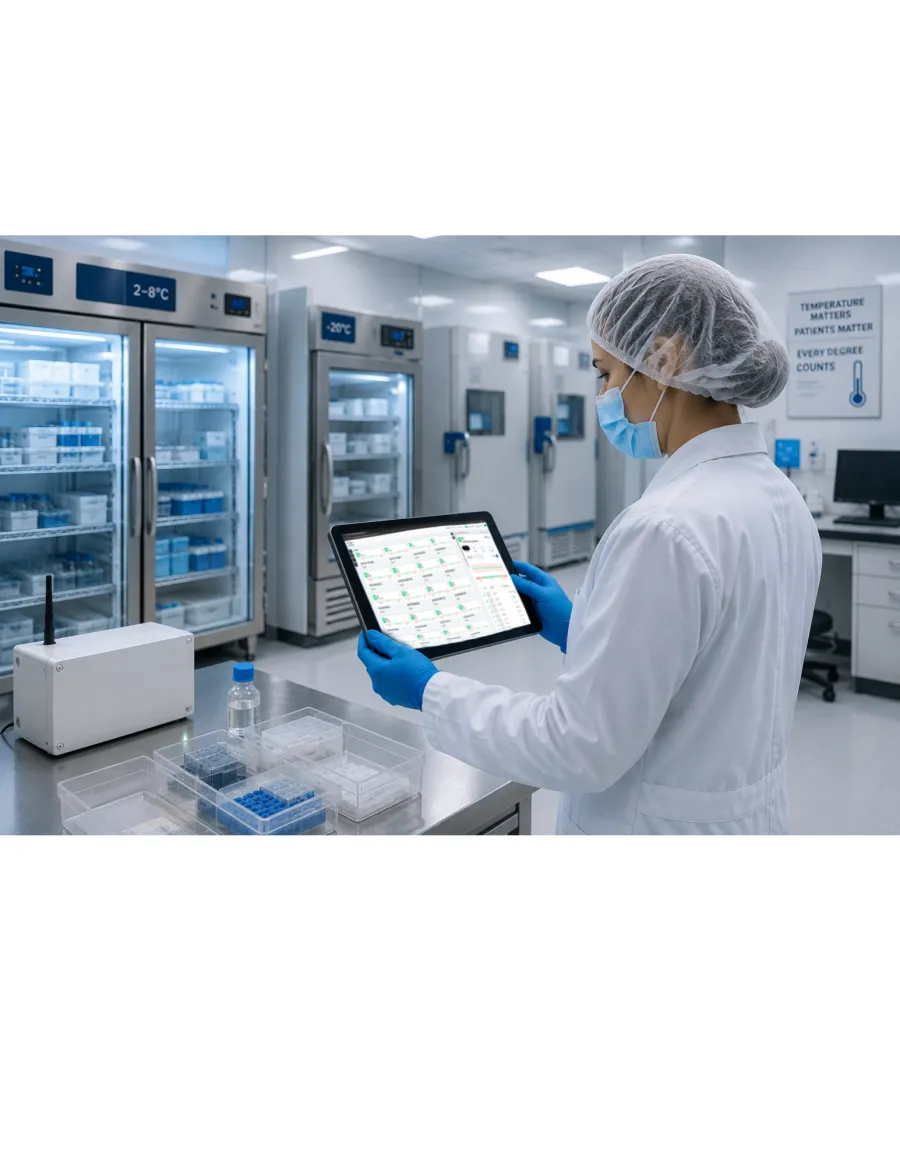
Environmental monitoring systems have evolved significantly. Today, facilities have access to real-time data, automated alerts, and detailed reporting that support critical operations every day.
As these systems continue to grow in capability, the focus is starting to shift. It is no longer just about collecting data. It is about how quickly and clearly that data can be understood and acted on.
The way users interact with their system plays a key role in how effective it ultimately is. For teams managing critical storage, labs, cleanrooms, or healthcare environments, the usability of an EMS can affect how quickly staff identify alarms, understand trends, generate reports, and respond to changing conditions.
Why EMS Usability Matters in Critical Environments
Across labs, blood banks, and pharmaceutical environments, there are still opportunities to improve how users interact with their systems:
- Navigating dashboards can take more time than it should
- Moving from an alarm to the root cause is not always straightforward
- Interfaces can vary across systems or locations
- Training new users can take longer than expected
These are not limitations of the data itself, but of how that data is presented. Improving usability helps teams move faster and with greater confidence.
Common Usability Challenges in Environmental Monitoring Systems
As monitoring environments become more complex, usability plays a larger role in overall system effectiveness.
A well-designed interface can:
- Help teams respond to alarms more quickly
- Reduce the risk of missed or misinterpreted data
- Lower training time for new personnel
- Improve confidence in daily system use
It is not just about how a system looks. It is about how well it supports decision-making in real time.
What Good EMS Design Should Do
The most effective systems are built around clarity and speed.
That means:
- Critical data is visible immediately, without unnecessary steps
- Alarms and trends are easy to interpret at a glance
- Navigation is intuitive, even for infrequent users
- Information is consistent across different views and locations
The system should support how users think and work, making it easier to move from awareness to action.
Who Benefits From More Intuitive Environmental Monitoring Software?
As environmental monitoring systems become more advanced, usability is becoming increasingly important across regulated industries where teams rely on fast access to accurate environmental data.
More intuitive EMS software can help organizations improve response times, simplify workflows, and make environmental data easier to interpret across departments and facilities.
Industries that benefit include:
Pharmaceutical & Biotechnology Facilities
Pharma and biotech teams often manage large numbers of monitored environments, including laboratories, freezers, incubators, stability chambers, and manufacturing spaces. Intuitive EMS software helps users quickly identify alarms, review trends, and maintain visibility across critical operations.
Hospitals & Healthcare Laboratories
Healthcare environments depend on accurate environmental conditions to support patient testing, medication storage, and laboratory operations. Easier-to-use monitoring interfaces can help staff respond more efficiently while reducing the time spent navigating complex systems.
Blood & Tissue Banks
Blood products, tissue samples, and biologics require tightly controlled storage conditions. Clear dashboards, automated reporting, and centralized monitoring can help teams maintain oversight while supporting audit readiness and documentation requirements.
Cleanrooms & Controlled Environments
Cleanroom operators need immediate visibility into environmental conditions that could impact product quality or contamination control. Simplified interfaces and centralized alarm management help teams react quickly when conditions change.
Research & Academic Laboratories
Research facilities often have multiple users interacting with monitoring systems across different departments. User-friendly software can reduce training time and make it easier for researchers and lab managers to access the information they need.
A Shift Toward More Intuitive, Cloud-Based Monitoring
There is a clear shift happening in environmental monitoring.
Beyond collecting data, systems are now being designed to make that data easier to understand and use. The goal is to reduce friction between detection and response.
One part of this shift is the evolution of user interfaces. Modern, browser-based GUIs are making it easier for teams to access and interact with their monitoring systems without being tied to a single workstation.
A Practical Example: Rees Helix
Rees Helix was developed to improve how users interact with their Rees Monitoring System. Instead of requiring users to work through multiple views or disconnected workflows, the platform integrates core EMS several features.It also provides a modern, web-based interface that makes it easier to view, manage, and interpret environmental monitoring data while maintaining the system users already rely on.
This approach allows teams to benefit from a more intuitive and accessible user experience without changing how their system operates. Key elements of the interface reflect this focus on usability:
- Immediate visibility of sensor data, including map-based views that keep readings front and center
- Single-click access to input details, including recent history and visual context around alarm limits
- Filtering and sorting capabilities that help users quickly identify inputs that require attention
- Integrated reporting with automation, supporting scheduled report generation and reducing manual effort
- Centralized system visibility, providing a clearer view of system status across probes and departments
These design choices are intended to make it easier for teams to interpret information and respond with confidence.
Where Environmental Monitoring Systems Are Headed
Environmental monitoring systems are managing more data, more locations, and more complexity than ever before.
That makes usability more important, not less.
The organizations that get the most value from their systems are the ones where teams can quickly understand what is happening and respond with confidence. That starts with how information is presented.
The ability to act quickly depends on the ability to see clearly.
Explore Rees Helix
If you would like to take a closer look at how Rees Helix is designed and what it enables, you can explore it in more detail on our website.
https://reesscientific.com/products/rees-helix-platform
For teams that want to see how it would work in practice, you can also request a walkthrough to get a closer look at the interface in action.
https://rr1eq.share.hsforms.com/2z5BOjyf8T5GaU5eZfv2diA