EMS
Beyond Temperature: 10 Critical Conditions Your Environmental Monitoring System Should Be Watching
Author: Gagan Kaur
Jul 28, 2026
Introduction
When most people think about environmental monitoring, temperature is usually the first thing that comes to mind. It's one of the most critical parameters in regulated environments, and for good reason. Temperature excursions can compromise product quality, invalidate research, and create compliance issues.
But today's laboratories, pharmaceutical manufacturers, healthcare facilities, and research organizations face risks that extend well beyond temperature alone.
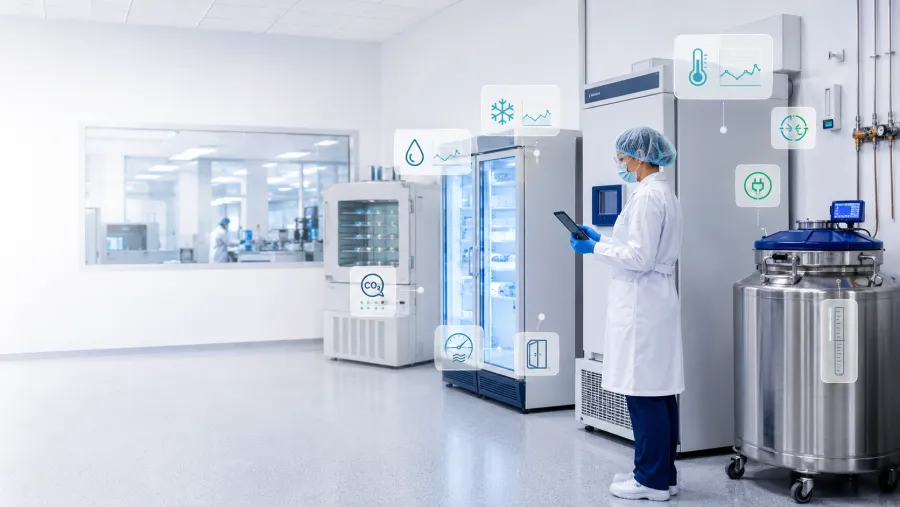
Modern environmental monitoring systems are designed to provide a much broader view of the conditions that affect product quality, equipment performance, regulatory compliance, and operational continuity. From differential pressure in cleanrooms to liquid nitrogen levels in cryogenic storage, monitoring multiple environmental parameters helps organizations identify issues before they become costly problems.
The right monitoring strategy depends on your facility, your processes, and the regulations you operate under. Understanding what can be monitored and why it matters is the first step toward building a more resilient monitoring program.
1. Temperature
Temperature remains the foundation of virtually every environmental monitoring program.
Whether you're storing vaccines, biologics, blood products, pharmaceuticals, reagents, or research samples, maintaining specified temperature ranges is essential for preserving quality and ensuring reliable results.
Critical applications include:
- Ultra-low temperature freezers
- Laboratory refrigerators
- Walk-in cold rooms
- Stability chambers
- Incubators
- Ambient storage
- Controlled room temperature areas
Monitoring should provide continuous data collection, automated alarm notifications, audit trails, and historical reporting rather than relying on periodic manual checks.
2. Relative Humidity
Humidity plays a significant role in product stability, manufacturing quality, and laboratory operations.
Excess humidity can promote microbial growth, damage sensitive materials, or affect manufacturing processes. Low humidity can create static electricity and impact equipment performance.
Facilities commonly monitoring humidity include:
- Pharmaceutical manufacturing
- Cleanrooms
- Controlled storage areas
- Calibration laboratories
- Museums and archives
- Animal research facilities
Monitoring humidity alongside temperature provides a more complete picture of environmental conditions.
3. Differential Pressure
Pressure differentials help ensure that cleanrooms and controlled environments maintain proper airflow between adjacent spaces.
Positive pressure protects sterile environments by preventing contaminants from entering.
Negative pressure helps contain hazardous materials and protects surrounding areas.
Common applications include:
- ISO cleanrooms
- Sterile compounding pharmacies
- Hospital isolation rooms
- Cell and gene therapy suites
- Biosafety laboratories
Even small pressure changes can indicate airflow problems that require immediate attention.
4. Carbon Dioxide (CO₂)
CO₂ monitoring is especially important for laboratories using incubators to grow cell cultures.
Successful cell growth depends on maintaining precise environmental conditions, including:
- Temperature
- Humidity
- CO₂ concentration
Changes in CO₂ levels can directly impact cell viability and research outcomes.
Continuous monitoring provides an independent record of incubator conditions rather than relying solely on equipment displays.
5. Liquid Nitrogen Levels
Cryogenic storage systems protect some of the most valuable materials in healthcare and research.
Examples include:
- Stem cells
- Cell therapies
- Tissue samples
- Embryos
- Cord blood
- Biological specimens
Monitoring liquid nitrogen levels allows facilities to respond before storage conditions become critical, reducing the risk of catastrophic sample loss.
6. Power Status
Sometimes the greatest threat isn't environmental conditions.
It's the loss of power itself.
Monitoring electrical power helps organizations identify outages affecting:
- Freezers
- Refrigerators
- Incubators
- Critical laboratory equipment
- Environmental chambers
Power monitoring provides immediate notification when equipment loses power, allowing staff to respond before temperatures begin to drift.
7. Door Status
Open doors are one of the most common causes of temperature excursions.
Monitoring door status helps facilities identify when doors remain open longer than expected, allowing staff to intervene before product integrity is affected.
Applications include:
- Freezers
- Refrigerators
- Cold rooms
- Controlled storage
- Equipment rooms
Door monitoring also supports investigations by documenting exactly when access occurred.
8. Water Leak Detection
Water damage can disrupt laboratory operations, damage expensive equipment, and threaten years of research.
Water detection sensors can provide early warning near:
- Mechanical rooms
- Freezers
- Chillers
- HVAC equipment
- Data centers
- Water purification systems
Identifying small leaks before they become major incidents can prevent significant downtime and repair costs.
9. Airflow
Proper airflow is critical in many controlled environments.
Reduced airflow may indicate equipment problems, clogged filters, or HVAC performance issues that could eventually affect product quality or room classification.
Airflow monitoring is commonly used in:
- Cleanrooms
- Biological safety cabinets
- Fume hoods
- Pharmaceutical manufacturing
- Controlled laboratories
Continuous monitoring helps verify that airflow remains within acceptable operating parameters.
10. Particulate Monitoring
For many regulated manufacturing environments, airborne particle counts are just as important as temperature and humidity.
Particle monitoring helps verify that cleanrooms continue to meet required classifications and maintain appropriate environmental conditions.
Industries commonly monitoring particles include:
- Pharmaceutical manufacturing
- Cell and gene therapy
- Medical device manufacturing
- Semiconductor manufacturing
- Advanced research laboratories
Combining particle monitoring with other environmental parameters provides a more comprehensive understanding of facility performance.
Building a Comprehensive Monitoring Strategy
Not every facility needs to monitor every parameter.
A hospital pharmacy has different monitoring requirements than a cryogenic biobank. A pharmaceutical cleanroom faces different environmental risks than an academic research laboratory.
The key is understanding which environmental conditions have the greatest impact on your products, research, regulatory obligations, and daily operations.
A comprehensive environmental monitoring strategy should consider:
- Regulatory requirements
- Critical equipment
- Process risks
- Facility layout
- Alarm response procedures
- Future expansion plans
- Data integrity requirements
Rather than focusing on a single environmental parameter, many organizations are adopting integrated monitoring systems that provide centralized visibility across multiple conditions from one platform.
How Rees Scientific Supports Comprehensive Environmental Monitoring
At Rees Scientific, we understand that protecting critical environments requires more than monitoring temperature alone.
Our environmental monitoring solutions support a wide range of sensors and monitoring applications, allowing organizations to oversee multiple environmental conditions from a centralized platform. Whether you're monitoring temperature, humidity, differential pressure, CO₂, liquid nitrogen levels, power status, water leaks, airflow, or other critical parameters, our systems are designed to provide continuous monitoring, automated alarms, secure data collection, and reporting to help support operational and regulatory requirements.
By combining multiple monitoring technologies into a single system, organizations gain greater visibility into their facilities while simplifying day-to-day management and reducing the complexity of managing separate monitoring solutions.
Conclusion
Environmental monitoring has evolved significantly over the past decade.
While temperature remains one of the most critical measurements, it is no longer the only condition organizations need to monitor. Today's regulated facilities rely on a broader understanding of their environments to protect products, support research, maintain compliance, and minimize operational risk.
Evaluating which environmental conditions matter most to your facility is an important step toward building a monitoring strategy that supports both today's operations and tomorrow's growth.
If you're assessing your current monitoring program or planning future expansions, understanding the full range of available monitoring capabilities can help ensure your facility is prepared for whatever comes next.
Contact Rees Scientific to discuss your monitoring requirements and learn how a comprehensive environmental monitoring strategy can help support your facility today and as it grows.