EMS
GxP Environmental Monitoring Systems: What Regulated Facilities Should Look For
Author: Gagan Kaur
Jun 8, 2026
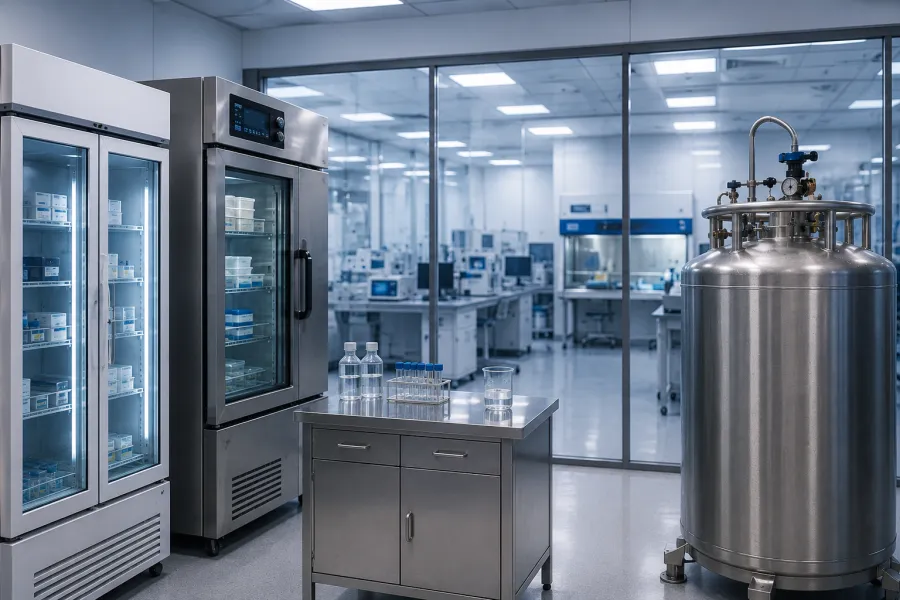
Environmental monitoring plays a critical role in protecting products, samples, research materials, and patient safety across regulated environments. Whether monitoring refrigerators, freezers, incubators, stability chambers, cleanrooms, blood storage, or liquid nitrogen systems, organizations depend on Environmental Monitoring Systems to provide continuous visibility into critical conditions.
In GxP environments, environmental data is more than an operational record. It can become part of the quality record used to support investigations, product release decisions, audits, and regulatory inspections.
That means selecting an Environmental Monitoring System involves much more than choosing sensors and alarm notifications. Regulated facilities need a system that supports data integrity, validation, traceability, audit readiness, alarm response, and long-term reliability.
What Makes an EMS GxP Ready?
A GxP-ready Environmental Monitoring System should help organizations maintain confidence in their environmental records while supporting compliance and operational continuity.
Key capabilities include:
- Continuous monitoring
- Secure audit trails
- Data integrity controls
- Alarm management and escalation
- Validation support
- Calibration traceability
- Local data buffering
- System redundancy
- Reliable technical support
These capabilities help ensure environmental data remains complete, accurate, secure, and available when it is needed most.
For more than 40 years, Rees Scientific has provided Environmental Monitoring Systems purpose-built for regulated environments. In addition to monitoring technology, Rees offers validation services, calibration support, mapping studies, requalification services, and 24/7 technical assistance to help organizations maintain confidence in their monitoring programs.
Data Integrity and Audit Trails
Environmental monitoring data often supports quality decisions, deviation investigations, and inspection responses. Because of this, organizations must be able to demonstrate that records are reliable, secure, and protected from unauthorized modification.
A properly designed EMS should automatically document key system activity, including:
- User logins
- Alarm acknowledgements
- Setpoint changes
- Configuration modifications
- Calibration activity
- Sensor replacements
- System maintenance events
These records create a secure audit trail that helps demonstrate accountability and traceability.
Manual recordkeeping can increase the risk of incomplete documentation, inconsistent practices, and human error. Automated environmental monitoring helps reduce these risks by continuously collecting and storing data while maintaining a detailed history of system activity.
Rees Scientific’s Environmental Monitoring System includes audit trail functionality designed to support inspection readiness and provide visibility into critical system events.
Why Local Buffering Matters
One of the most important and often overlooked EMS capabilities is local buffering.
Network outages, wireless interference, server maintenance, and communication failures can happen in any facility. When they do, regulated organizations still need confidence that environmental monitoring continued and that data was preserved.
Without local buffering, communication interruptions can create gaps in environmental records. In a GxP environment, missing data can become a compliance concern and complicate investigations.
Local buffering allows monitoring devices to temporarily store environmental data during communication disruptions and automatically transmit the information once connectivity is restored. This helps maintain a complete environmental history and demonstrates that monitoring remained active even when communication pathways were unavailable.
Rees Scientific incorporates local buffering at the wireless module level, allowing environmental data to be retained directly at the field device during outages. Once communication is restored, the stored data is automatically uploaded to the monitoring system.
When evaluating an EMS provider, organizations should ask:
- Where is data buffered?
- How much data can be stored locally?
- What happens during extended outages?
- Can communication failures result in missing records?
- How is restored data displayed, reported, and audited?
The answers can have significant implications for compliance, investigations, and audit readiness.
Alarm Management and Escalation
An Environmental Monitoring System is only effective if the right people are notified when environmental conditions move outside established limits.
A strong alarm management strategy should include:
- Real-time notifications
- Alarm acknowledgement tracking
- Escalation procedures
- Multiple notification methods
- Alarm testing and verification
- Clear response ownership
Most regulated facilities rely on multiple communication channels to ensure alarms are received promptly, including phone calls, text messages, email notifications, and on-screen alerts.
Escalation procedures are equally important. If an alarm remains unacknowledged, additional personnel should be notified automatically according to predefined response procedures.
Effective alarm management can help reduce response times, minimize product risk, and support investigation activities.
Rees Scientific supports configurable alarm notification and escalation workflows, allowing organizations to establish response procedures that align with their operational and quality requirements.
Validation, Calibration, and Lifecycle Support
Validation is one of the most important considerations when implementing an Environmental Monitoring System in a regulated environment.
Organizations need confidence that:
- Sensors are accurate
- Alarms function properly
- Reports are reliable
- Data is stored securely
- System activity is traceable
- The system performs as intended
Environmental monitoring validation may include Installation Qualification, Operational Qualification, alarm testing, mapping studies, calibration verification, and periodic requalification.
Calibration is equally important. Over time, sensors can drift, potentially affecting data accuracy and quality decisions. Routine calibration helps ensure environmental records remain reliable and defensible.
An effective calibration program should include:
- Traceable calibration standards
- Calibration certificates
- Defined calibration intervals
- Documented procedures
- Out-of-tolerance assessments
Rees Scientific provides validation and qualification services, mapping studies, calibration support, and requalification services designed to help organizations maintain confidence throughout the system lifecycle.
Reliability and Business Continuity
Environmental monitoring systems often protect products, materials, and research assets with significant operational, clinical, and financial value. Reliability should therefore be a major consideration when selecting an EMS.
Key features that support business continuity may include:
- Battery backup
- Redundant communication pathways
- Cellular backup
- Local buffering
- Scalable architecture
- Failover capabilities
- 24/7 technical support
These safeguards help organizations maintain visibility into critical environments during unexpected events.
Rees Scientific designs its Environmental Monitoring Systems with reliability in mind, helping organizations maintain monitoring continuity while reducing operational and compliance risk.
Frequently Asked Questions
What is a GxP Environmental Monitoring System?
A GxP Environmental Monitoring System continuously monitors environmental conditions while supporting data integrity, traceability, validation, audit readiness, and compliance requirements commonly found in regulated industries.
Why is local buffering important?
Local buffering preserves environmental data during communication interruptions and helps prevent gaps in environmental records.
Does an EMS need validation?
In many regulated environments, environmental monitoring systems require validation to demonstrate that they perform as intended and generate reliable data.
What should an EMS audit trail capture?
Audit trails should document key activity such as user logins, alarm acknowledgements, setpoint changes, configuration changes, calibration activity, sensor replacements, and system maintenance events.
How often should environmental monitoring sensors be calibrated?
Calibration frequency depends on internal procedures, risk assessments, and application requirements. Many organizations perform calibration annually, although critical applications may require more frequent verification.
What should organizations look for in an EMS provider?
Organizations should evaluate data integrity controls, audit trail capabilities, local buffering, alarm management, validation support, calibration services, system redundancy, technical support, and experience in regulated environments.
Supporting Compliance Through Purpose-Built Monitoring
Environmental monitoring is no longer simply about collecting temperature readings. In regulated environments, it is an essential component of the quality system.
Organizations evaluating Environmental Monitoring Systems should look beyond basic monitoring functionality and focus on the capabilities that support long-term reliability and audit readiness. Features such as audit trails, local buffering, alarm escalation, validation support, calibration services, and system redundancy can play a critical role in maintaining confidence in environmental records.
For more than four decades, Rees Scientific has helped regulated organizations monitor and protect critical environments through Environmental Monitoring Systems, validation services, calibration support, mapping studies, requalification services, and 24/7 technical assistance.
Evaluate Your Environmental Monitoring Program
Not sure if your current Environmental Monitoring System meets today’s GxP expectations?
Rees Scientific can help assess your monitoring strategy, validation approach, alarm management process, calibration program, and data integrity controls to identify potential compliance gaps and opportunities for improvement.
Schedule a consultation with Rees Scientific.
BLOG