Validation Services
Incubator Monitoring Best Practices in Regulated Environments: Why Display Temperature Isn't the Whole Story
Author: Tommy O’Donnell
Jun 22, 2026
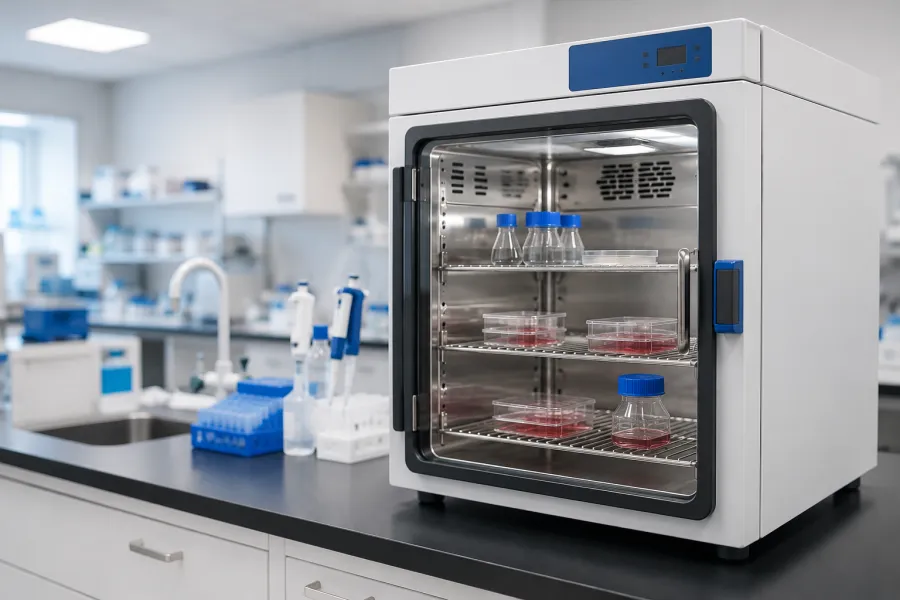
Incubators are among the most critical pieces of equipment found in pharmaceutical, biotechnology, clinical, and research laboratories. Whether supporting cell culture work, microbiological testing, or product development activities, incubators provide the controlled environment necessary to maintain sample integrity and produce reliable results. Effective incubator monitoring is what separates a unit that looks compliant from one that can actually prove it.
Key takeaways:
- An incubator display alone doesn't prove compliance. In regulated environments, organizations need a validated monitoring system, routine calibration, and documented procedures to demonstrate that environmental conditions remain within specification.
- Ongoing qualification is just as important as initial qualification. Risk-based requalification, temperature mapping, alarm testing, and regular maintenance help verify that incubators continue to perform as intended throughout their lifecycle.
- Clear documentation reduces audit risk. Defining your system of record, maintaining calibration and qualification records, and establishing procedures for handling deviations create a more defensible and reliable monitoring program.
Most laboratory incubators operate at approximately 37°C, and a typical control range is ±1°C. The actual acceptance criteria should come from your User Requirement Specification (URS) rather than a default assumption. Because these systems often support regulated processes, maintaining accurate temperature control is not simply an operational concern. It is a quality and compliance requirement.
It is also worth noting that many incubators, particularly CO2 incubators supporting cell culture, control more than temperature. They regulate CO2 and humidity as well (often 95 to 98 percent RH). When that is the case, the same monitoring, calibration, and qualification principles in this article apply to all controlled parameters, not just temperature. Temperature is the focus here because it is the most common point of confusion, but a complete program addresses every parameter the unit is relied upon to hold.
One of the most common issues I encounter during qualification activities is a discrepancy between the temperature displayed on the incubator and the temperature recorded by the system of record. Understanding why this occurs and how to manage it is essential for maintaining a compliant and defensible operation.
Display Temperature vs. Recorded Temperature: What's the Difference?
Many users assume the temperature shown on the incubator display represents the actual conditions experienced by their samples. In reality, the display temperature is often generated by a control sensor located in a specific area of the unit and is primarily used to regulate heating and cooling functions.
The environmental monitoring system may use a separate calibrated sensor placed elsewhere within the chamber. Because these sensors are measuring different locations and serving different purposes, slight variations are expected.
Problems arise when organizations fail to establish which measurement represents the official system of record.
During audits, investigators are generally more concerned with the validated, calibrated measurement used to demonstrate environmental control than the value displayed on the equipment itself. If a discrepancy exists and there is no documented explanation, questions about data integrity and process control can quickly follow.
Why Sensor Placement Matters in Incubator Monitoring
The location of the monitoring probe plays a significant role in temperature readings. An incubator may maintain an average chamber temperature of 37°C while experiencing localized temperature variations throughout the cabinet. These differences can become more pronounced when:
- Shelves are heavily loaded
- Doors are opened frequently
- Airflow is obstructed
- Equipment is aging or poorly maintained
- Components such as fans begin to degrade
A qualified monitoring system should measure conditions that are representative of the environment where critical samples are stored. This is why proper sensor placement should be evaluated during qualification and periodically reviewed as operational needs change.
The Importance of Incubator Calibration
Routine calibration is one of the most effective ways to maintain confidence in incubator performance. Over time, sensors drift. Even high-quality sensors can gradually move outside their intended accuracy range. Without regular calibration, organizations may unknowingly rely on inaccurate temperature data.
A comprehensive incubator calibration program should include:
- Verification of the incubator's internal sensors
- Calibration of environmental monitoring sensors
- Documentation traceable to recognized standards (ISO/IEC 17025 accredited where appropriate)
- Evaluation of any identified deviations
- Corrective actions when tolerances are exceeded
For regulated environments, calibration records provide objective evidence that environmental conditions are being accurately measured and controlled. Each record should capture the instrument identifier, calibration date, reference standard and its traceability chain, as-found and as-left values, acceptance criteria, and pass or fail outcome.
Incubator Qualification and Requalification Should Extend Beyond Installation
Many organizations perform Installation Qualification (IQ) and Operational Qualification (OQ) when an incubator is first installed but give less attention to ongoing performance verification. The IQ, OQ, and PQ framework described here aligns with the qualification lifecycle in USP General Chapter <1058> and the ISPE Good Practice Guide: Controlled Temperature Chambers (2nd Edition, 2021).
Incubators experience wear over time. Door seals degrade, airflow patterns change, sensors age, and usage patterns evolve. Periodic requalification helps verify that the unit continues to perform as intended throughout its lifecycle. A meaningful requalification is more than a calibration check. It typically includes:
- Temperature mapping in both empty and loaded configurations, using a defined sensor layout (small chambers like incubators commonly use a 9-point, 3x3 grid with a minimum of nine sensors, collected over at least 24 hours)
- Recovery studies that measure how the unit returns to setpoint after door openings and power loss
- Alarm verification across high and low conditions (and CO2 conditions for CO2 units)
- Sensor verification
- Performance testing under operating conditions
- Review of calibration records and maintenance history
These activities help identify issues before they impact product quality or regulatory compliance.
A note on frequency. The older industry habit was to remap and requalify on a fixed annual schedule. Current guidance has moved away from a one-size-fits-all interval. The ISPE Good Practice Guide now ties periodic review frequency to the risk of failure to maintain uniform temperature and to the criticality of the product stored. In practice, that means a unit holding low-risk material with a strong performance history may justify a longer interval, while a unit holding high-value or high-risk product warrants more frequent review. Annual remains a reasonable default starting point, but it should be the output of a risk assessment, not a substitute for one.
Establishing a Defensible System of Record
One of the most important decisions a laboratory can make is defining its official system of record.
If the environmental monitoring system serves as the validated source of temperature data, personnel should understand that minor differences between the incubator display and monitoring system readings may be expected.
Organizations should document:
- Which measurement is considered the official record
- Acceptable variance between readings
- Investigation thresholds
- Calibration and maintenance requirements
- Procedures for responding to excursions
Clear documentation reduces confusion, improves consistency, and provides confidence during inspections and audits.
Final Thoughts
Incubators may appear straightforward, but maintaining them in a regulated environment requires more than simply checking the temperature displayed on the front panel.
A strong maintenance and qualification strategy includes routine calibration, periodic requalification, proper sensor placement, and a clearly defined system of record. By understanding the relationship between the incubator's control system and the monitoring system that supports compliance activities, organizations can reduce risk, improve data reliability, and maintain confidence in the conditions supporting their critical processes.
When it comes to incubator performance, the goal is not simply to achieve 37°C. The goal is to demonstrate, with documented evidence, that the environment remains controlled, accurate, and suitable for its intended use.
Frequently Asked Questions About Incubator Maintenance and Monitoring
1. How often should laboratory incubators be calibrated?
Annual calibration is a common and reasonable default, but frequency should be set by a risk assessment that considers manufacturer recommendations, the criticality of the product or process the unit supports, and the unit's performance history. The same risk-based thinking applies to periodic requalification and remapping. Current ISPE guidance favors intervals tied to failure risk and product criticality over a fixed one-size-fits-all schedule. Regular calibration provides documented evidence of control for audits and inspections.
2. Why does my incubator display temperature differ from my monitoring system reading?
Differences between the incubator display and an environmental monitoring system are common because the sensors are often located in different positions and serve different functions. The incubator display typically reflects the control sensor used to regulate temperature, while the monitoring system measures conditions at a location chosen to represent the environment experienced by samples. Organizations should establish which measurement serves as the official system of record and document the acceptable variance between the two.
3. What is temperature mapping for an incubator?
Temperature mapping is a qualification activity that measures temperatures throughout the incubator chamber to identify hot spots, cold spots, and overall temperature uniformity. Small chambers like incubators commonly use a 9-point (3x3) sensor grid with a minimum of nine sensors, recorded over at least 24 hours, in both empty and loaded configurations. Mapping studies help verify that critical samples are stored within acceptable conditions and support compliance with regulatory expectations.
4. What are the most common compliance issues associated with laboratory incubators?
Some of the most common compliance concerns include overdue calibrations, undocumented differences between display and monitoring system temperatures, inadequate alarm testing, lack of requalification, and poor documentation of maintenance activities. These issues can raise questions about data integrity and environmental control during inspections.
5. Do incubators require requalification after maintenance or repairs?
Yes. Depending on the nature of the repair, requalification may be necessary to confirm the incubator continues to operate within established specifications. Activities such as sensor replacement, controller adjustments, major repairs, decontamination cycles, or relocation of the unit often warrant some level of requalification or performance verification before returning the incubator to service.
Need help qualifying, calibrating, or monitoring your laboratory incubators?
Rees Scientific provides calibration, mapping, qualification, and environmental monitoring solutions designed to help regulated organizations maintain confidence in their critical equipment. Our experts work with pharmaceutical, biotechnology, healthcare, and research facilities to develop monitoring and qualification strategies that support operational and quality objectives.
Learn more about our Calibration, Qualification, and Validation (CQV) services or contact our team to discuss your incubator monitoring requirements.